Igbo Community Of South Australia Engages Minister Zoe Bettison On Cultural Partnership, Multicultural Initiatives

Igbo Community Of South Australia Engages Minister Zoe Bettison On Cultural Partnership, Multicultural Initiatives
…..“Our culture is ancient, dynamic, and deeply rooted in communal values- Amaefuna, president,Igbo community, South Australia
…….seeks establishment of “Igbo village” in South Australia

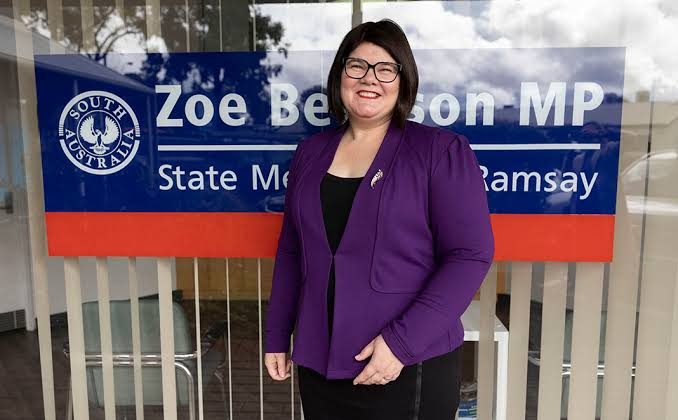
Minister for Multicultural Affairs and Tourism,South Australia,Zoe Bettison MP
By Frank Odinukaeze
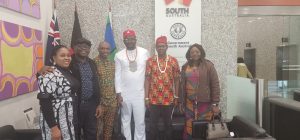
In a landmark engagement aimed at strengthening multicultural ties and promoting cultural innovation, the Igbo Community of South Australia (ICSA) met with the Honourable Zoe Bettison MP, South Australia’s Minister for Multicultural Affairs and Tourism, at her Adelaide office on Thursday, July 31.
The meeting, led by Mr. Joseph Amaefuna, President of the Igbo Community of South Australia, highlighted the Igbo community’s contributions to the cultural fabric of the state and outlined strategic proposals designed to enhance cultural education, inclusion, and tourism.
In his address, Mr. Amaefuna expressed profound gratitude to the South Australian Government for its enduring support for multicultural communities. He noted that the inclusive environment fostered by the state has allowed the Igbo people to thrive, preserve their heritage, and contribute meaningfully to civic and economic life.
“Our culture is ancient, dynamic, and deeply rooted in communal values – values which align in many ways with those of Australia’s First Nations peoples,” Mr. Amaefuna said. “South Australia has become a place where every culture can flourish.”
A key proposal presented during the meeting was the establishment of an Igbo-Africa Village in South Australia. Modeled after the Igbo Village in Staunton, Virginia, USA, the envisioned site would serve as a vibrant cultural, educational, and tourism hub showcasing Igbo traditions, architecture, food, crafts, music, and history. The initiative aims to position South Australia as a leader in cultural tourism and deepen community understanding of African heritage.
Mr. Amaefuna also advocated for the inclusion of African literary classics – such as Things Fall Apart by Chinua Achebe and Half of a Yellow Sun by Chimamanda Ngozi Adichie – in the state’s high school curriculum, to enhance global literacy and cultural awareness.
Further recommendations included recognising outstanding Igbo global figures such as Chief Emeka Anyaoku, Dr. Ngozi Okonjo-Iweala, and Chimamanda Ngozi Adichie through street naming in South Australia, and introducing Igbo as an elective language in the state’s high schools to promote linguistic diversity and empower African-Australian students.
The meeting also reflected on the success of the first-ever Igbo Catholic Mass in South Australia, a milestone that brought together faith, language, and culture in a powerful expression of community identity.
The Igbo Community of South Australia reaffirmed its commitment to being a proactive partner in the state’s multicultural development, tourism initiatives, and cultural enrichment programs.
As Mr. Amaefuna concluded, quoting an Igbo proverb: “Onye kwe, chi ya ekwe” – when one agrees to move forward, even destiny aligns in their favour.
In her response ,South Australian Minister for Multicultural Affairs and Tourism, the Hon. Zoe Bettison MP, welcomed the idea of an “Igbo Village”and advised the community to begin laying the groundwork by establishing strong management structures and seeking collaborations with non-governmental organisations. She noted that such a project could qualify for government cultural infrastructure grants.
On the inclusion of iconic Nigerian literary works — such as Things Fall Apart by Chinua Achebe and Half of a Yellow Sun by Chimamanda Ngozi Adichie — in South Australia’s school curriculum. The Minister recommended that the community formally engage the Department for Education, the body responsible for reviewing and approving curriculum content, to explore the feasibility of integrating African literature into classroom learning.
In a symbolic move aimed at recognition and representation, the Igbo community also raised the issue of naming public streets after prominent Igbo figures. Names such as Chief Emeka Anyaoku, Dr. Ngozi Okonjo-Iweala, and Chimamanda Ngozi Adichie were suggested as potential honorees. Minister Bettison encouraged the community to take their proposals to local councils, particularly in regions with a notable Igbo population, to initiate the naming process.

The discussion also touched on language preservation and youth education. Minister Bettison highlighted existing ethnic language schools in the state and urged the community to consider reviving an Igbo language and cultural school. She added that with proper structure and demand, Igbo could potentially be offered as an elective subject at the senior secondary level.
Commending the delegation for their vision, resilience, and commitment to promoting cultural diversity, Minister Bettison expressed her support for the community’s initiatives and encouraged continuous engagement with relevant government bodies.
Following the meeting, leaders of the Igbo Community of South Australia expressed optimism about the opportunities ahead. They confirmed plans to follow up with the Department for Education and local councils to advance the proposals discussed.
In his vote of thanks, Mr. Nnaemeka Umenzeakor, the Public Relations Officer of ICSA, praised the Minister for her hospitality and openness to the community’s ideas. “This visit has been both meaningful and encouraging,” he said. “Your support gives us confidence in the future we are building together.”