Truckers Cry Out Over Alleged Extortion, Demand Exit of ETO from Nigerian Ports

Truckers Cry Out Over Alleged Extortion, Demand Exit of ETO from Nigerian Ports

Mr.EKE Collins
By Frank Odinukaeze &Ruth Sunday
Tensions are rising at Nigerian ports as truck operators voice strong opposition to the continued operations of the Electronic Call-Up System (ETO), calling for its immediate removal. During a recent interview, truckers accused the system and its handlers of extortion, lack of transparency, and worsening conditions for stakeholders in the haulage business.
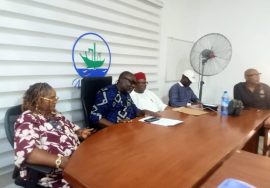
Speaking on behalf of truckers, Mr. Ekeh Collins , a truck operator and vocal critic of the current port management system, described the situation as unbearable.
“Before now, these ports were congested and chaotic. We thought the introduction of the ETO would ease access and improve management. Initially, it worked. We could enter and exit the ports more easily,” he said.
However, according to Mr. Collins , the reality on ground has since shifted drastically. He claimed that truckers are now subjected to multiple, unregulated fees just to access port roads and pick up containers.
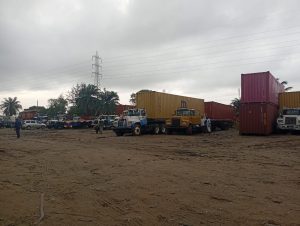
The garage in question in KLT, where they alleged that TTP bought and drove the away
“ETO officials, or those claiming to represent them, collect between 10,000 and 15,000 naira from us, in addition to the 5,000 naira NPA usually collected. If you don’t pay and submit the receipt, you’re denied access,” he explained.
He further alleged that even when transporting empty containers or using flatbed trucks, drivers are still forced to make these payments. In some instances, access fees reportedly rise to as high as 200,000 naira, depending on the location and the nature of the goods.
Truckers are demanding clarity on who benefits from these payments.
“We don’t know where the money goes – whether it’s the federal government, the state, NPA, or just individuals. There is no accountability. We’ve been calling on the press because the burden is too much. We can’t maintain our trucks anymore. We are dying,” Collins lamented.
The truckers emphasized that they are not against order and regulation but questioned the need for ETO when the NPA already has a dedicated traffic section.
“If the NPA does not need its traffic unit anymore, let them say so. But handing everything over to the Truck Transit Park, operations of ETO is not helping us. We don’t need ETO at the ports. They are milking us dry,” he declared passionately.
Joining the call for reform was Mr. Imaho, identified as the vice-chairman of the truckers’ union, who expressed support for the concerns raised and echoed the demand for,TTP, operators of ETO withdrawal.
They further alleged that the TTP,threw them out of the SODICk Garage at Kirikiri lighter Terminal KLT,which they claimed to have bought
Collins lamented the manner with which truckers are fleeced in the ETO transactions.
Recall that the TTP in conjunction with the Nigerian Customs Service NCS had a training of the freight forwarders and Agents on the workings of the ETo at the Customs processing Centre,CPC ,Apapa recently.The objective was to educate stakeholders , particularly the freight agents on how to obtain the ETO ticket on their own without going through a third party
Speaking at the training , the Head of Operations at TTP, Mr Irabor Akonoman, debunked misinformation circulating among stakeholders regarding the pricing of Ètò tickets. “The official price remains the same since inception N20,750. What people are paying higher amounts for is the manipulation by racketeers. This training is about empowering you with practical knowledge of the booking procedures,” Akonoman noted.
According to Collins,” We are not against the system ( device), but the handlers, the operators or the TTP organisation “. The aggrieved truckers,accused them of none transparency, aiding and abating extortion, racketeering and Corruption , as well as delays in accessing the port at the right time.
As discontent grows, truckers are urging the government, the Nigerian Ports Authority, and other relevant agencies to investigate the alleged fraud and intervene before the situation worsens.
The Electronic Call-Up System (ETO) was introduced to streamline port access, reduce congestion, and bring order to a once-chaotic system. However, if these allegations hold weight, stakeholders may need to revisit its implementation and impact on the very people it was meant to assist.